
Science
Discover how our primary Science programme builds curiosity, critical thinking, and environmental awareness through hands-on learning, enrichment activities, and outdoor experiences.

Vision
Every Child A Scientist
Mission
To nurture curious and active learners through inquiry-based learning and develop their scientific skills for life-long learning.

OUR PRIMARY SCIENCE FOCUS AREAS
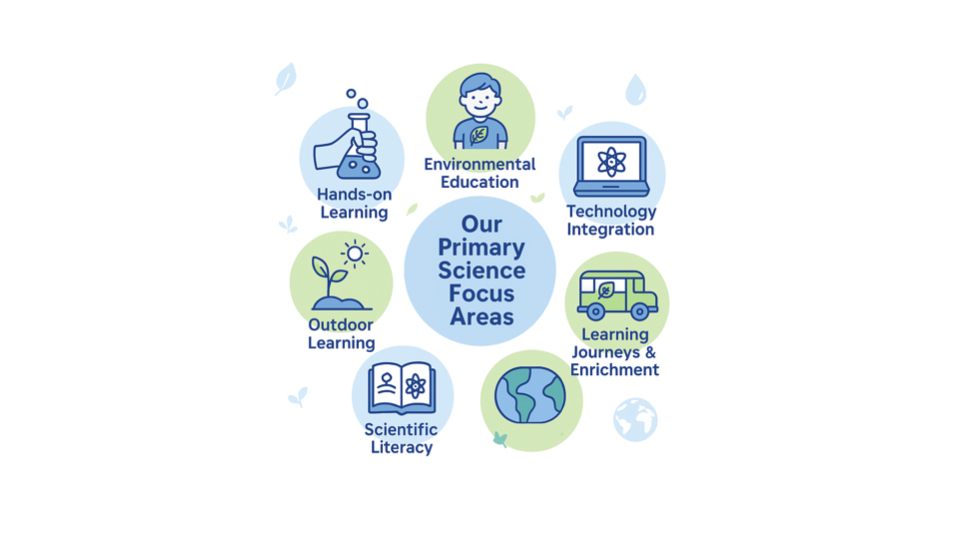
Our goals:
Develop scientifically literate students who think critically and apply knowledge effectively
Nurture environmental stewardship through student leadership and community engagement
Provide authentic learning experiences through hands-on activities and outdoor education
Foster scientific curiosity and inquiry skills through structured programmes and competitions
Develop 21st Century Competencies through:
Communication and collaboration in environmental outreach
Critical and inventive thinking in scientific investigations
Civic literacy through sustainability initiatives
TECHNOLOGY
Student Learning Space and other ICT tools
SLS Website: https://learning.moe.edu.sg (opens in new tab)
To nurture confident and active user of technology, SLS is used to complement classroom teaching and further enrich students’ learning experience.
In addition, teachers may also use other ICT tools or Google apps such as google slides and spreadsheets to conduct the lessons at the computer laboratories or use of iPads.
HANDS-ON ACTIVITIES
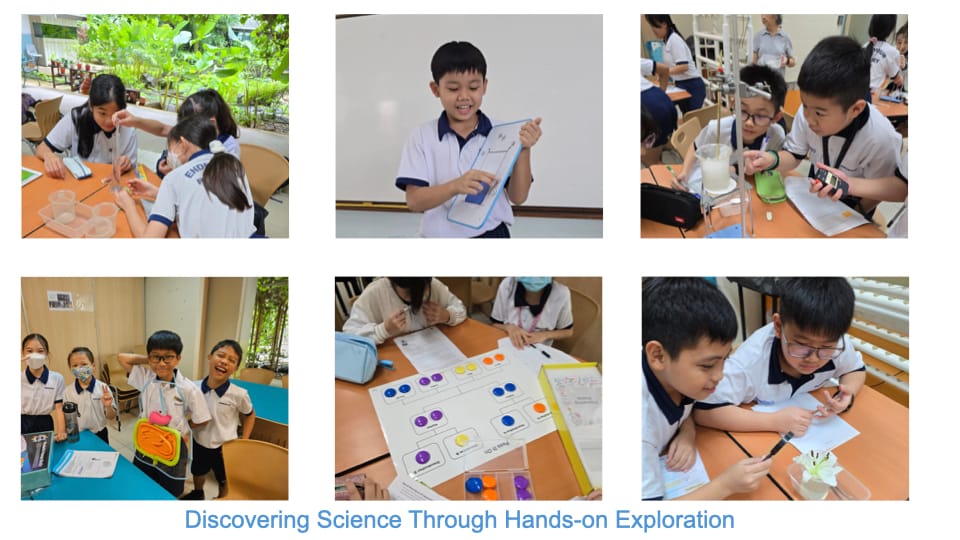
Hands-on Activities During Lessons
Students engage in meaningful hands-on activities to explore and understand scientific concepts through the Science Inquiry Approach. Our well-equipped Science laboratories provide a safe environment for practical sessions, where students develop critical thinking and process skills through systematic investigation.
We utilise SPARKLE (Science Pack Activity Resource Kits for Learning) kits, which are developed by the Ministry of Education (MOE) and Science Centre Singapore. These kits encourage students to explore and test their scientific ideas through "hands-on, minds-on" activities. Through guided questions and discussion alongside practical investigations, students:
Pose investigative questions about scientific phenomena
Plan and conduct investigations using appropriate methods and tools
Collect and analyse data to form logical conclusions
Communicate their findings and reflect on their learning
Through a blend of guided practical work with SPARKLE kits and teacher demonstrations, students develop both conceptual understanding and scientific skills. These experiential learning opportunities help nurture students' curiosity about the natural and physical world while building their confidence in scientific investigation.
SCIENTIFIC LITERACY
We believe in nurturing our students to become scientifically literate individuals who can thrive in today's world. Scientific literacy goes beyond just understanding facts – it empowers our students to:
Think critically about the world around them
Make informed decisions based on evidence
Communicate scientific ideas effectively
Appreciate how science impacts our daily lives
Our approach to developing scientific literacy aligns with international standards, including those measured by the Programme for International Student Assessment (PISA). We achieve this through:
Structured Learning Support
We've developed customised learning packages that help students master scientific vocabulary and concepts in an age-appropriate way. Our students learn to explain scientific phenomena clearly and confidently using proper scientific language.
Thinking Frameworks
Using specially designed thinking frameworks like Concept-Cause and Effect, we guide students to analyse scientific phenomena systematically. This helps them understand the relationships between different scientific concepts and their real-world applications.
Through these approaches, our students develop strong foundations in scientific thinking and communication, preparing them for future learning and real-world challenges.
ENRICHMENT AND LEARNING JOURNEY
We integrate environmental sustainability across our science learning journeys, helping students understand their role in creating a greener future. Our signature programmes include:
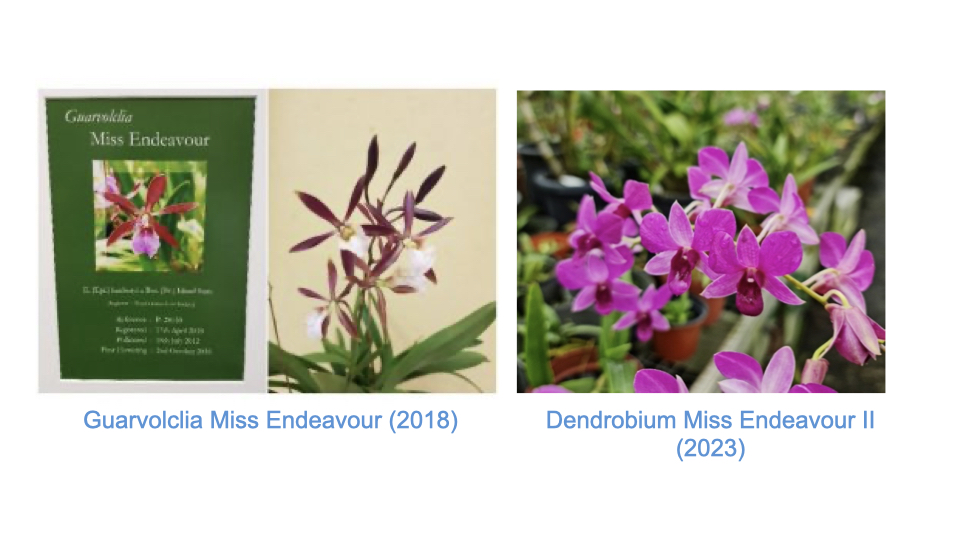
Orchid Hybridisation Programme (OH! At Endeavour) Our P5 programme combines hands-on learning with environmental stewardship. Students:
Learn advanced pollination and hybridisation techniques
Practice aseptic tissue culture methods
Understand orchid care and conservation
Contribute to Singapore's orchid heritage
This programme has successfully produced two registered hybrids:
Guarvolclia Miss Endeavour (2018)
Dendrobium Miss Endeavour II (2023), created to commemorate the school's 15th anniversary. This hybrid symbolises our values of diligence and perseverance.
Excellence 2000 (E2K) Science Programme
This enrichment programme caters to students who demonstrate strong interest and ability in Science. Through engaging hands-on activities, students:
Develop scientific inquiry process skills
Engage in higher-order thinking and problem-solving
Work collaboratively on challenging scientific tasks
Learn through discovery and exploration
Our learning journeys and enrichment programmes are carefully curated each year to complement the curriculum and deepen students' understanding of sustainability and scientific concepts through real-world applications.
COMPETITIONS & ACHIEVEMENTS
We provide opportunities for students to showcase their scientific knowledge and skills through various competitions:
Science Olympiad Selected students participate in this competition to:
Challenge themselves with advanced scientific concepts
Develop critical thinking skills
Apply their scientific knowledge in competitive settings
Science Elementz Students participate in this investigative research competition to:
Conduct scientific investigations
Develop research skills
Present their findings
External Competitions Students also participate in competitions organized by:
Science Centre Singapore
Other educational institutions
These platforms allow our students to extend their learning beyond the classroom while building confidence in their scientific capabilities.
ENVIRONMENT EDUCATION
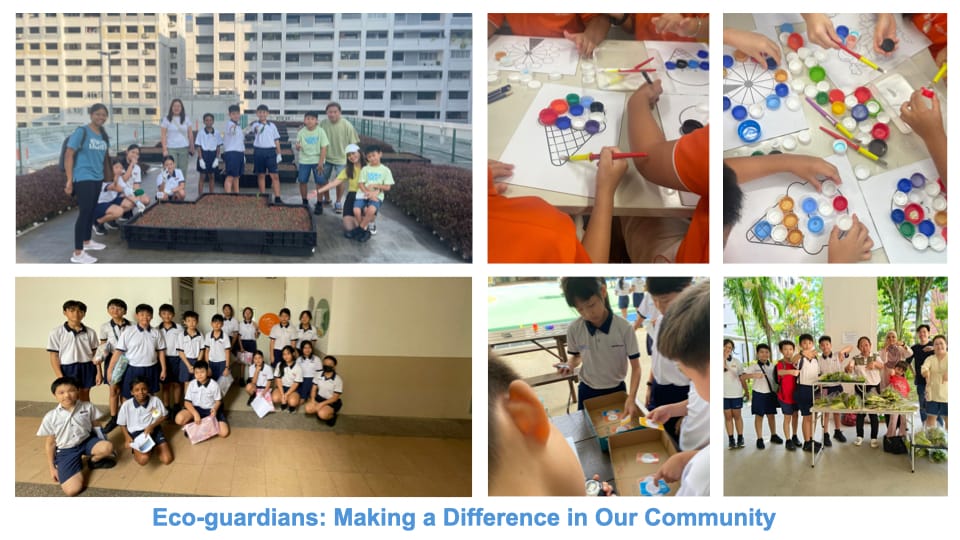
Eco-guardians: Nurturing Environmental Leaders
Our Eco-guardians programme develops passionate environmental leaders from P4 to P6 who champion sustainability within and beyond our school community. The programme features a tiered leadership structure, with outstanding students advancing to the Executive Committee (EXCO) in P6.
Leadership Development Eco-guardians develop essential skills through:
Content curation on environmental topics
Workshop facilitation and public speaking
Project management and team collaboration
Community outreach and partnerships
Key Initiatives Our Eco-guardians lead various environmental projects:
Sustainability workshops for preschoolers
Upcycling and recycling campaigns
Water conservation awareness
Dengue prevention education
Urban farming and food sustainability
Community Impact We believe in nurturing environmental consciousness from young. Our Eco-guardians:
Partner with preschools for environmental education
Create and deliver engaging workshops
Lead by example in sustainable practices
Share knowledge through student-created resources
Training and Development The programme begins each January with comprehensive training sessions covering:
Environmental leadership skills
Garden management and urban farming
Project planning and execution
Public speaking and presentation skills
Through these experiences, our Eco-guardians develop into confident, articulate, and environmentally conscious leaders who can effectively inspire positive change in their community.
OUTDOOR LEARNING
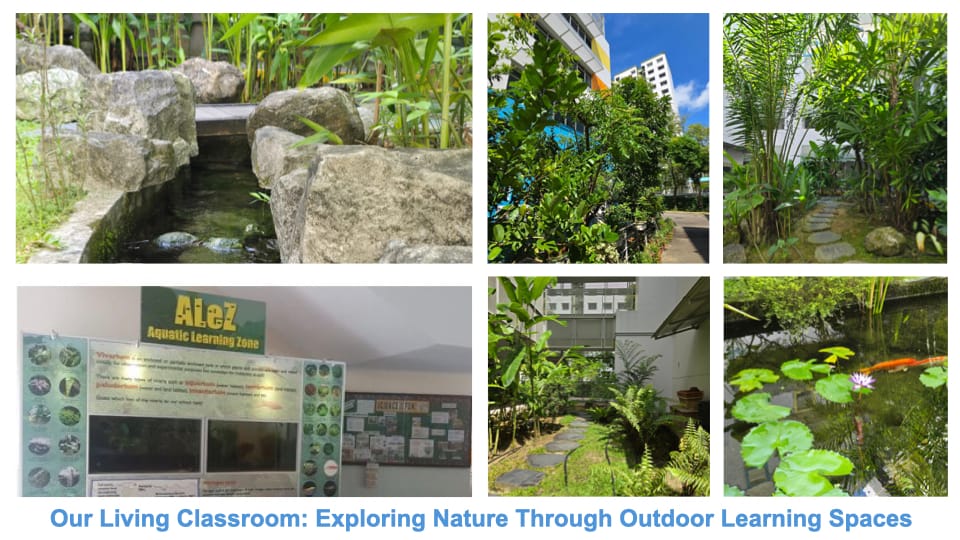
Our diverse outdoor learning spaces provide students with hands-on experiences in environmental education and sustainable living practices.
Eco-Garden
A dynamic outdoor classroom featuring diverse learning zones:
Aquarium for studying aquatic life
Eco-Pond: A thriving aquatic ecosystem with diverse plants and animals for hands-on learning about water conservation, pond life, and biodiversity
Fern Paradise showcasing different fern species
Leaf Litter and Rotting Log area for decomposition studies
Wormery for composting education
Flowering Plants section for biodiversity studies
Aquatic Learning Experience Zone (ALeZ)
Features two specialized tanks:
Terrarium tank showcasing semi-aquatic ecosystems
Aquatic Fishes and Plant Tank demonstrating freshwater habitats
Supports hands-on learning for P3-P6 Science topics
Enables close observation of aquatic biodiversity
Hydroponics System
A modern farming facility that:
Demonstrates soil-less growing techniques
Produces leafy vegetables sustainably
Teaches students about food security
Showcases agricultural technology
Rooftop Garden
Adjacent to our hydroponics system, this flowering garden:
Creates a natural habitat attracting pollinators like butterflies and birds
Provides opportunities for observing plant-animal interactions
Serves as an outdoor classroom for biodiversity studies
Offers a peaceful space for students to connect with nature
Fruit Tree Trail
A collection of fruit-bearing trees including:
Citrus varieties like lemon and kaffir lime
Tropical fruits such as mango and chiku
Other edible plants like tomatoes
Demonstrates food-producing plants in an urban setting
These integrated outdoor spaces create immersive learning environments where students can develop deep appreciation for nature and understand the importance of environmental conservation.

Refer to the QR codes provided at the back of each activity book.
Follow us on Instagram #edpscience for more pictures and updates.